
The EB-5 Immigrant Investor Program may provide a pathway to U.S. permanent residency through investment . After receiving a 2-year conditional green card, the final step is filing Form I-829, Petition by Investor to Remove Conditions on Permanent Resident Status. This petition is essential because it converts conditional status to permanent residency, securing long-term residency in the United States.
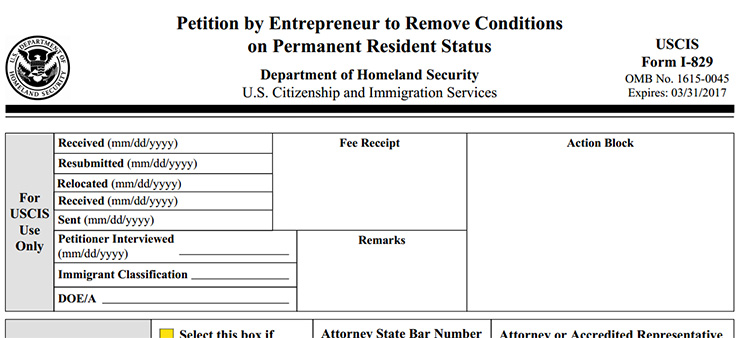
When Should You File the I-829?
Timing is critical for the I-829 process. Investors must file the petition within the 90-day window before the conditional green card expires, which typically falls 21 to 24 months after the card was issued.
Missing this deadline can result in serious consequences, including loss of status, so it is important to plan and set reminders well in advance.
What Are the Key Requirements?
To remove conditions, investors must demonstrate two main things:
- The investment was sustained throughout the required period.
- The job creation requirement were met.
Investment Sustainment Requirement
The original rules required investors to keep their investment “at risk” throughout the entire period of conditional permanent residency. This meant that even if the EB-5 project was completed and funds were ready for return, the capital could not be redeemed until the investor’s I-829 was approved. In many cases, this led to redeployment of funds into new projects to maintain compliance, creating uncertainty, and additional risk for investors.
However, the EB-5 Reform and Integrity Act (RIA), enacted on March 15, 2022, introduced a significant change to this requirement. For investors who filed their EB-5 petition before RIA, the old rule still applies: the investment must remain at risk for the entire two-year conditional residency period, which begins when the investor becomes a conditional permanent resident (either through adjustment of status or entry on an immigrant visa). If funds are returned early, redeployment is required to maintain compliance.
For investors who filed on or after March 15, 2022, the RIA simplified the rule. The law now requires that the investment “is expected to remain invested for not less than two years” from the date the capital is contributed to the New Commercial Enterprise (NCE) and placed at risk, including being made available to the Job-Creating Entity (JCE), as appropriate. This change eliminates the need to sustain the investment throughout the entire conditional residency period and significantly reduces the need for redeployment. After two years and job-creation compliance, the investment may be eligible for redemption, subject to the project’s exit terms.
Job Creation Requirement
The second requirement is job creation. EB-5 law mandates that each investor’s capital must create or preserve at least 10 full-time jobs for qualifying U.S. workers. These jobs must be:
- Full-time positions (minimum 35 hours per week.
- Filled by U.S. citizens, lawful permanent residents, or other authorized immigrants (not the investor or their family).
- Created within the NCE or JCE associated with the EB-5 project.
For regional center investments, indirect and induced jobs calculated through economic modeling can count toward the total, provided the methodology was approved in the project’s economic analysis. For direct EB-5 investments, only direct jobs on the payroll qualify.
Evidence typically includes payroll records, tax filings, and economic impact reports for regional center projects. Meeting this requirement is essential because failure to demonstrate job creation is one of the most common reasons for I-829 denials.
What Happens After Approval and When Can Investors Expect Repayment?
Once the I-829 petition is approved, the conditions on the permanent resident status are removed, and the investor receives a 10-year green card. This visa is renewable indefinitely and confirms status as a U.S. permanent resident, allowing to live and work in the United States without restrictions.
Many EB-5 projects structure investor capital as loans or equity buybacks, and repayment typically occurs after I-829 approval or in accordance with the project’s exit terms. It is important to review offering documents carefully to understand repayment timelines and conditions, as these vary by project.
Tips for a Smooth I-829 Process
The key to a successful I-829 filing lies in preparation:
- Investors should track project reports regularly and maintain open communication with their regional center or project manager.
- From the very beginning, keep copies of all critical documents, including subscription agreements, wire transfer receipts, and project updates related to job creation.
- Staying organized and proactive will make the process far less stressful and help ensure timely approval.

This article was written by Alex Kim and Mitch Wexler, Fragomen, Del Rey, Bernsen & Loewy, LLP
This article is for informational purposes only and does not constitute an offer to sell or a solicitation to buy any securities. Any EB-5 investment opportunity may be offered only through official offering documents and solely to qualified investors in compliance with applicable laws and regulations.
EB-5 investments involve risk, including potential loss of capital and immigration-related risk. Approval outcomes and investment results cannot be guaranteed.